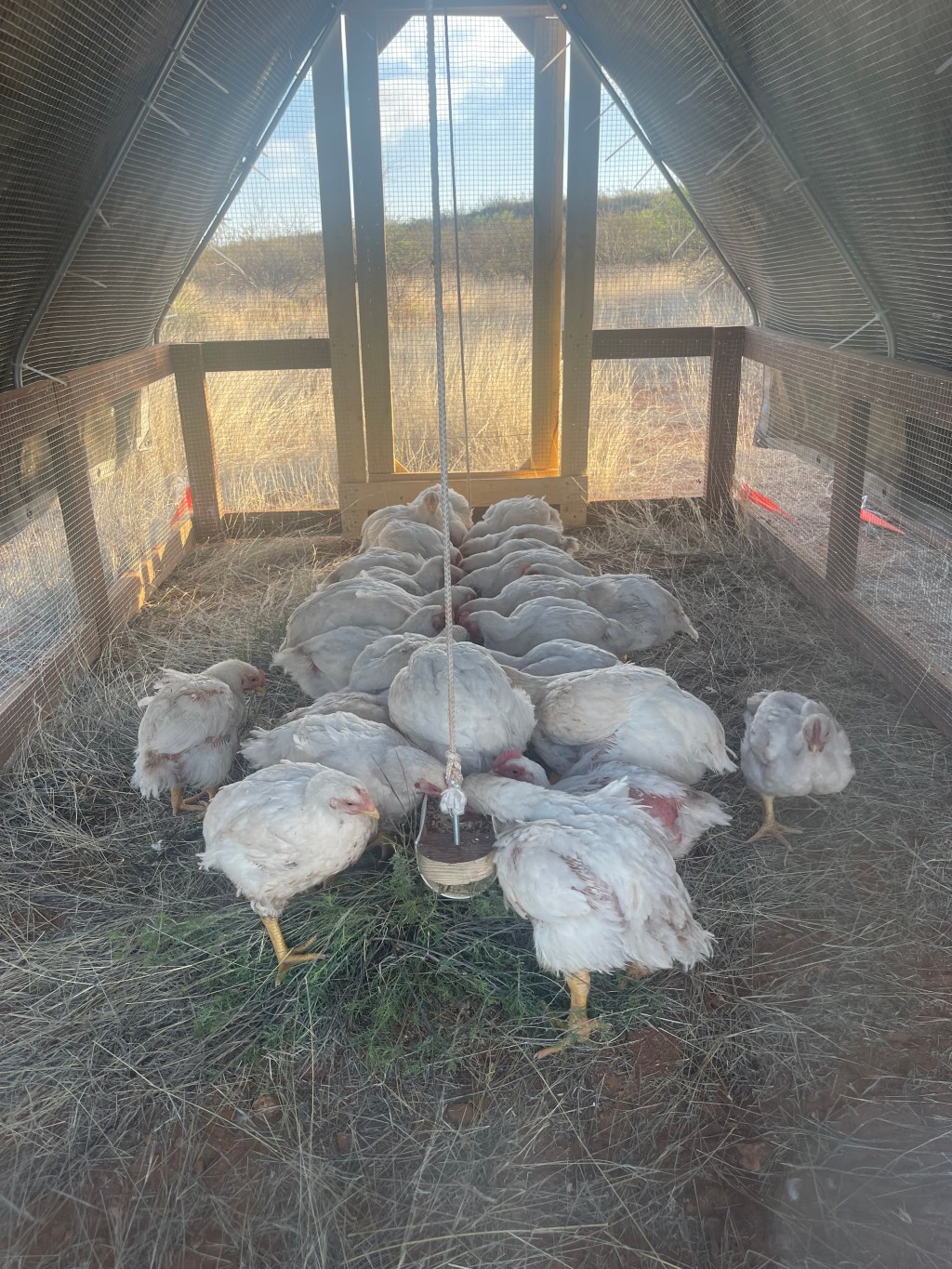
When our family started raising chickens and ducks, it became apparent within just a couple weeks that raising our own meat was not an effective way of saving money. When we tallied up the cost of a day old bird, the cost of the feed, and the cost of packaging materials alone, it was impossible for us to raise chickens for an equivalent price to what we would pay for a chicken at the supermarket. On top of that, the amount of time spent on the chickens, the minor expenses like bedding material, and the housing and equipment for processing made it obvious that raising our own meat was not apparently cost effective. As we went through the process and brainstorming of turning poultry farming into a business, we had to think about what our time was worth, what we could reasonably charge, and why anyone would consider buying our poultry when they could spend maybe as little as 1/3rd of the amount at a grocery store any day they need it.
To our surprise, very few people have commented on the price we’re charging at all. It appears that many of our local customers do already believe that paying more for a quality product is worth the expense and we’ve had a lot of people excited to hear that we’re planning on doing this in our area. A few people have seemed alarmed by the price though and I get where they’re coming from… It was not that long ago that the thought of paying $5 or more per lb of chicken was insane to me. Before we started raising our own meat, I was that shopper that went to the store and browsed the manager’s specials and discounts to find the cheapest meat available and rejoiced when I would find 50 cent per lb chicken quarters.
Before even thinking about why someone would buy our higher priced chicken, we actually talked more about all the things we wouldn’t use to justify the higher price tag. We didn’t want to be the people that just say “support local” without providing a tangible benefit for a customer that would be spending money on our products. We also didn’t want to say “it costs us more money and takes me more time” because those are reasons we HAVE to charge a higher price than a supermarket, but they’re certainly not reasons that a CUSTOMER should pay 2-3x more… In other words, our inefficiencies can’t be the basis of a customer’s reasoning for spending more of their hard earned money. There needs to be a true, recognizable benefit to the customer if we’re going to ask them to pay a premium for our products. So while it is true that supporting local is great and that it costs us significantly more to get a bird to market than it costs a national supplier, we wouldn’t have started this business if we didn’t think that it was well worth it to customers to buy from us. We can even eliminate the argument for animal welfare (though we don’t think we should) and all the work we’re doing to farm in a regenerative manner because those are more like fringe benefits to customers than a direct benefit.
So what are the benefits to buying our chicken?
The most obvious benefit that we see with our chickens is quite simply the quality of the meat. If you’ve never tasted a chicken that was scratching around in the earth, foraging for bugs, and getting to act like a chicken, I’d actually say there’s an argument to be made that you’ve never experienced the taste of chicken. The chickens that are raised on wood shavings and crammed into houses are so far removed from a natural chicken that you could argue they’re more like little meat plants than they are a chicken. If the chicken wasn’t able to eat like a chicken, behave like a chicken, or live like a chicken, can you really be certain you know what chickens taste like?
Because our chickens are fed a fresh, wholesome feed and they’re up walking around constantly scratching around in the ground, they tend to be leaner than most of the large grocery store chickens… They’ve been exercising after all. Make no mistake, they have fat on them especially near the bottoms of the thighs, but they don’t have excess fat. They have enough to keep the meat moist while cooking, but a small enough amount that it renders out easily and the skin of the chicken is easier to cook to a crisp as a result. Since they’re up and about foraging, they also get a slightly more intense flavor. In future batches of chickens we will be adding more breeds that are even better at foraging for even greater differentiation of flavor from supermarket chickens.
Also notably, our chickens are not injected with “broth” (I think the large producers use that word a little loosely in their pursuit of avoiding saying they inject water into their chickens to plump them up) so the weight of our chicken is all chicken. Almost all of the supermarket chickens are injected with something between 10% on the low end to 30% of their weight in broth. If you like paying for a couple dollars per pound for water, I guess buying their chicken is a great way to do so. While the suppliers claim that this is done to retain moisture and that customers prefer the flavor, what they conveniently leave out is that the customers prefer the flavor because without it they can notice the flavor of the chlorine that is used in the processing facilities. Our chicken is 100% natural. We clean all of our processing surfaces with detergent, it gets well rinsed, gets sprayed with distilled vinegar as an extra sanitation precaution, rinsed again, and the process is repeated throughout the day. When the chickens are dispatched and plucked, they get eviscerated and rinsed with water, then they’re dunked in a heavily diluted vinegar bath (about 1 cup of distilled vinegar for 10 gallons of water) to destroy any potential surface bacteria on the chicken, and then they get dunked into an ice bath all within minutes of dispatch for very rapid cooling to prevent any bacterial growth. The brine that large commercial producers use also results in chicken that goes beyond tenderness to the point of mushiness. Our chicken is extremely tender when cooked properly, but it still retains a texture that maintains the structure of the meat when you slice through it or bite into it.
Legally, we can’t make the claim that our chicken is healthier for a consumer than chickens from a large chicken operation. However, we do believe that it is likely that our chicken is healthier for a consumer. Whereas most chickens eat a feed that is comprised mostly of corn and soy with extracts and additives for the micronutrients needed, our chickens eat milo, barley, peas, mealworms, and while this batch of chickens did consume some soy, it accounted for a very small portion of their diet. It has been eliminated in our feed going forward. Eating a very simple diet of only two real ingredients is not healthy for any living animal and it’s telling that the basis of nearly 80% of livestock feed in the USA is composed of soy and corn. Our chickens get the majority of the nutrients that they need from the feed itself, then they get a little bit of limestone for calcium, and the feed is fermented for healthy bacteria and increasing the bio-availability or digestibility of the nutrients. At a minimum, the elimination of corn and reduction of soy results in a paler colored fat and lighter meat overall with a flavor that we think is a substantial improvement.
With all of this, we realize that not everyone is going to share our same passion for changing the way we think about food and the way we purchase. Many people will look at this and say “I can’t afford to buy chicken at that price.” But truthfully, I think if people fully examined the side effects of the large industrial farming techniques we currently employee worldwide, from the erosion of topsoil, production of greenhouse gasses, pollution of water, excess use of water, etc. they would realize that they might not be paying directly with their pocketbooks, but make no mistake they’re still paying for it and it won’t be too long before people realize that what they truly can’t afford is to continue to support big agriculture with all the external costs.
 raisedincochise.com
Leave a comment