One thing that became clear when we set out to raise all of our own meat was that we could definitely do it with just our little yard. It also became obvious that doing so sucks. Keeping a tidy yard and raising hundreds of lbs of meat in it are two mutually exclusive goals. The more I raised meat and the more I learned though, the more I realized that I wanted to do it on a larger scale. A lot of the things that we wanted to do for our home raised meat wasn’t really possible on the very small scale. Minimum orders for the types of ducks we want to raise often exceed 15 or so ducks and chickens were hardly worth raising a few at a time. Their feed is perishable and I wanted to mix their feed myself so I could truly know exactly what the meat I raised had eaten, but a lot of the ingredients come in 50 lb bags, so without 50-100 meatbirds, it wasn’t possible to go through their feed ingredients in a timely manner before the nutrition of the feed began to decline.
One of the things I’ve thought about quite a bit ever since we started raising our first ducks was how it wasn’t important to execute 100% of our plans right away, but rather it’s important to always have an idea of what perfection is and to continuously take steps towards achieving all of our plans knowing that one day we’ll get there. At some point in the last year I began to realize that we were stagnant and that as a result, I wasn’t getting as much satisfaction from the way were doing things as I’d like. It was clear that we needed to step up and make some of the improvements I had been daydreaming about but that we also wouldn’t be able to afford to do so without generating some income from the operation.
As I work with the animals there’s plenty of time for the mind to wonder and I’ve found myself thinking constantly about changes I’d like to see in the world. Watching my home lawn turn from a dirty, dusty patch of earth into a pretty lush, green grass lawn over the last couple years I began thinking that I didn’t want to just raise meat, but rather it’s important to me that we raise extraordinarily tasty meat in a manner that is beneficial to the planet, sustainable, and ethical. I observed how our lawn now retains water and comes back to life early in the Spring even without watering and how every year the grass expands more and I started thinking about how we could do this on a larger scale. To my surprise, the perfect piece of land came up for sale a few months ago. It’s bare desert, not far from water, in an area that just 100 years ago was lush grassland before being overgrazed and reduced to nothing but dirt and rocks with a few invasive plant species… The perfect candidate for restoration.

Funnily enough, the grazing that resulted in so much damage to the land was the very thing that we turned to in order to begin restoring it. We are doing very controlled grazing with poultry to begin building up some fertility in the soil. Composted pine shavings from the brooders is being spread over the grazed spots for even more nutrient rich soil to break down and on top of the pine shavings we will be adding mulch to continue another layer of compost and to aid in water retention. The idea is to build a new layer of top soil that will retain water, grow new grass, provide new grazing opportunities in future seasons, and naturally compost more, eventually resulting in a soil that feeds a meat farm in a manner that actually takes in more carbon than the farm puts out for a net negative carbon emission. It will take years to get there, but we are determined to not measure our success in just how much meat we produce and sell, but rather by how much of a benefit our existence is to the land and the wildlife.

In the short term, we are raising Cornish Cross chickens, Pekin Ducks, Muscovy Ducks, Rouen Ducks, and very soon we will be adding our first pigs, bees, and a little further down the line we’ll be adding goats and sheep.
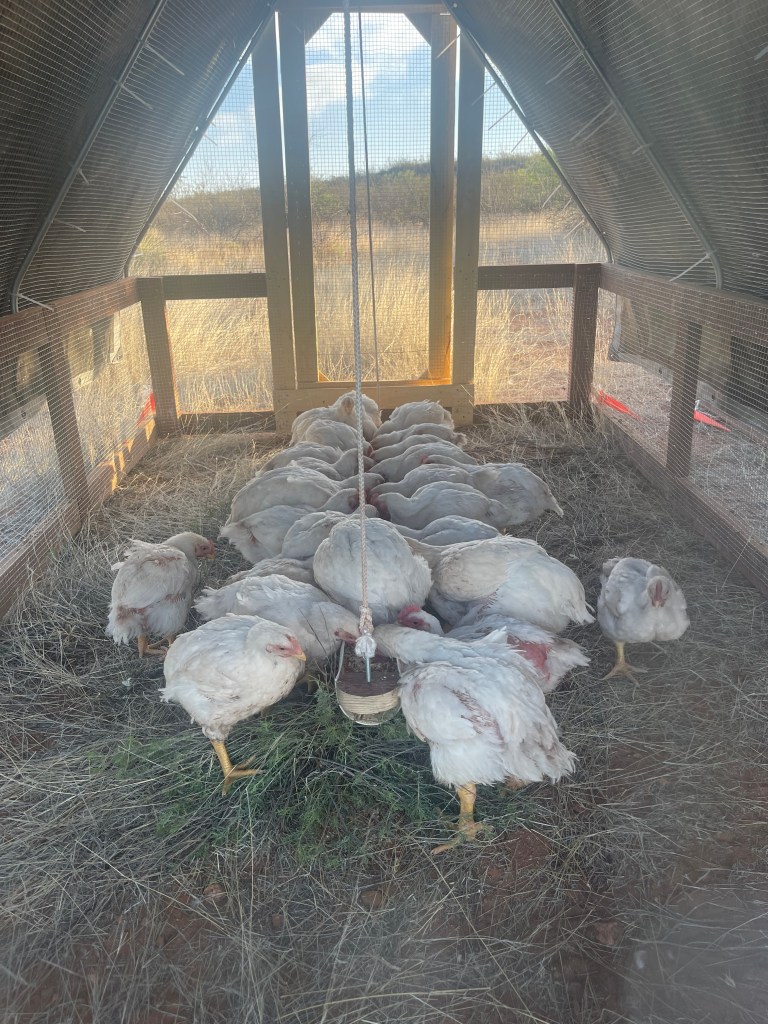
Cornish Cross Chickens: The Cornish Cross are surprisingly great chickens. I’ll admit that I was anti-Cornish Cross for a very long time because I didn’t really fully understand them. The argument against them is that they grow so fast that it doesn’t seem natural. In as little as 6 weeks, you can have a chicken that dresses out at 5 lbs because they’ve been selectively bred for decades to put on weight quickly. Most other chicken breeds will either never get that large or if they do they’ll take 16-24 weeks to get to the same size. In many cases in chicken houses, the chickens get big too quickly for their legs to develop and they can’t walk, or they grow so fast that heart, lung, and liver failure is common. They’re also so food driven that they will sometimes sleep with their head right on top of their food and they’ll appear to peck at the food in their sleep… It can be a bit disturbing when you see a chicken raised that way to say the least. However, they’re surprisingly well suited for life on a pasture, foraging for food, and catching insects. In order to combat the health risks of the breed, we keep our chickens on a restricted feed schedule that only allows them access to feed for 12 hours per day. We mix their feed fresh each week and ferment it so that the feed is extra nutritious and there is active bacteria in their guts to promote digestive health. Once the chickens are ready to move from their brooder, we take them out to the farm where they live in mobile “chicken tractors” which allows them access to fresh grass or clean ground every day. The chickens have to get up and walk when the tractors get moved and they have plenty of space to stay active, so we have the advantage of a rapid growing chicken without the disadvantages inherent to the rapid weight gain. The Cornish Cross is a cross of 3 chicken breeds with breeders selecting specific breeding stock of the purebred chickens and multiple generations of their offspring crosses to be able to create the Cornish Cross. Breeding Cornish Cross chickens isn’t really feasible since it’s not advisable to raise them all the way to maturity, but if you do breed them, the offspring will not be another Cornish Cross, but rather an entirely different breed altogether and the desirable growth traits will not persist in their offspring.

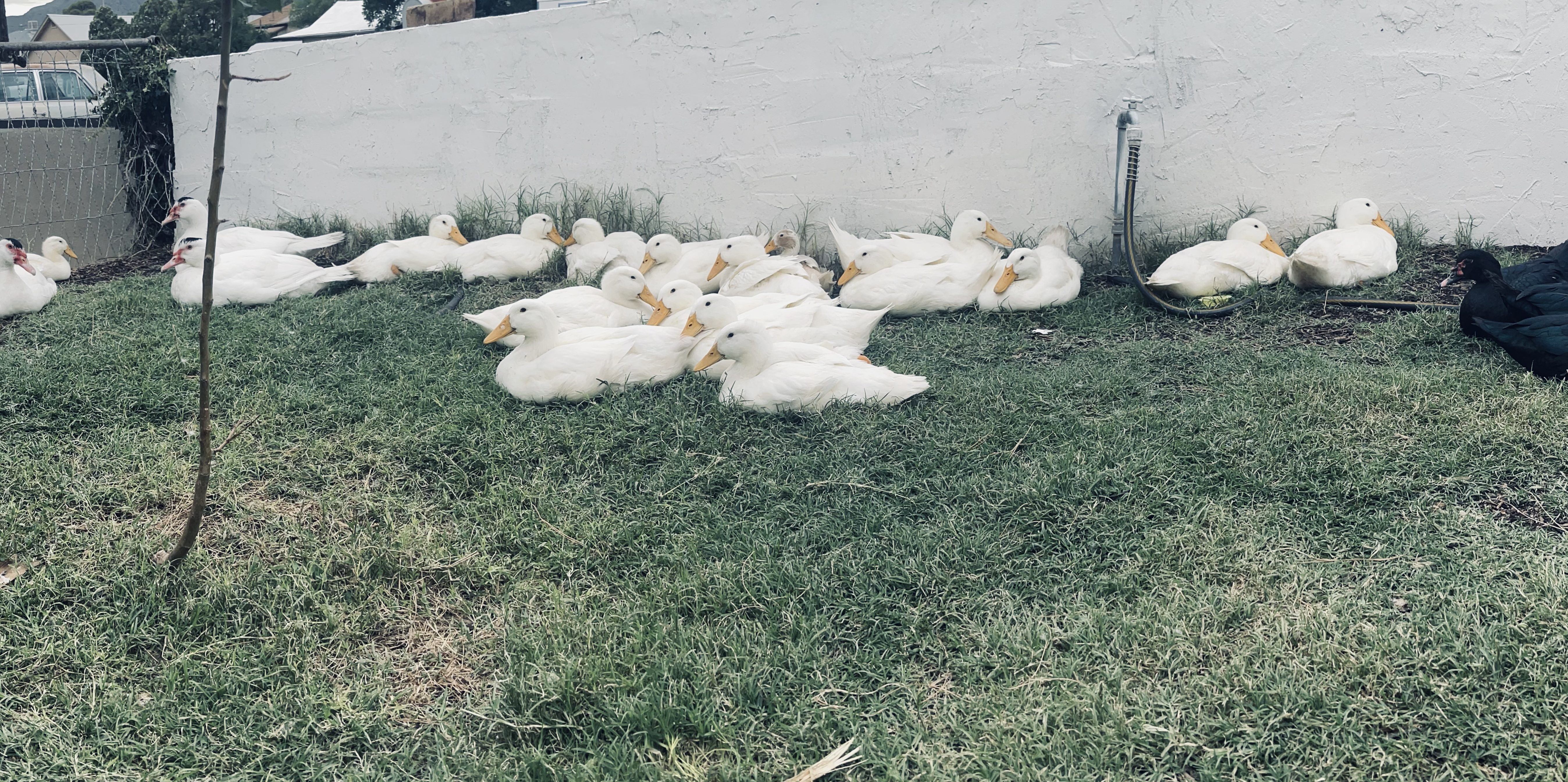
Pekin Ducks: Pekin ducks were the first animal we started raising for meat back in 2020. Pekin ducks are sometimes compared to Cornish Cross chickens because of their fast growing nature, but that’s really quite a poor comparison. Pekin ducks do grow very quickly, but properly bred Pekins should be able to thrive in just about any environment without any major health concerns. They originated from selective breeding in China over the course of thousands of years before being brought to the USA in the late 1800’s. Pekins are great because they do get very big very quickly, but they can also be used for egg laying and natural breeding. Since they are a pure bred breed, their offspring will be more Pekins. However, it is important to pay attention to genetics of Pekins. Our Pekins come from a very well established breeder from France who maintains several different lines of Pekins. Ours come from crossing two of their lines. They have a line of breeding hens that lay up to 290 eggs in a year and are of medium size and they have a line of breeding drakes that grow quickly which they cross. The result is offspring that are highly productive egg layers with fast growth rates. We continue to breed from their ducks by keeping the fastest growing drake (not necessarily the one that gets the largest, but the one that grows the quickest) from our flock while also taking into account how calm and gentle he is and the most productive hens. Our ducks then create offspring with hens that lay around 250 eggs per year and drakes that dress out over 5 lbs in just 7 weeks. One of the things we love with Pekins is their abundance of fat which can be rendered and used for frying oil or used in baking. The later in the year that the Pekins get processed, the more fat they put on, so there is a notable difference between a duck processed in the middle of Winter when compared to a duck processed in the Summer.
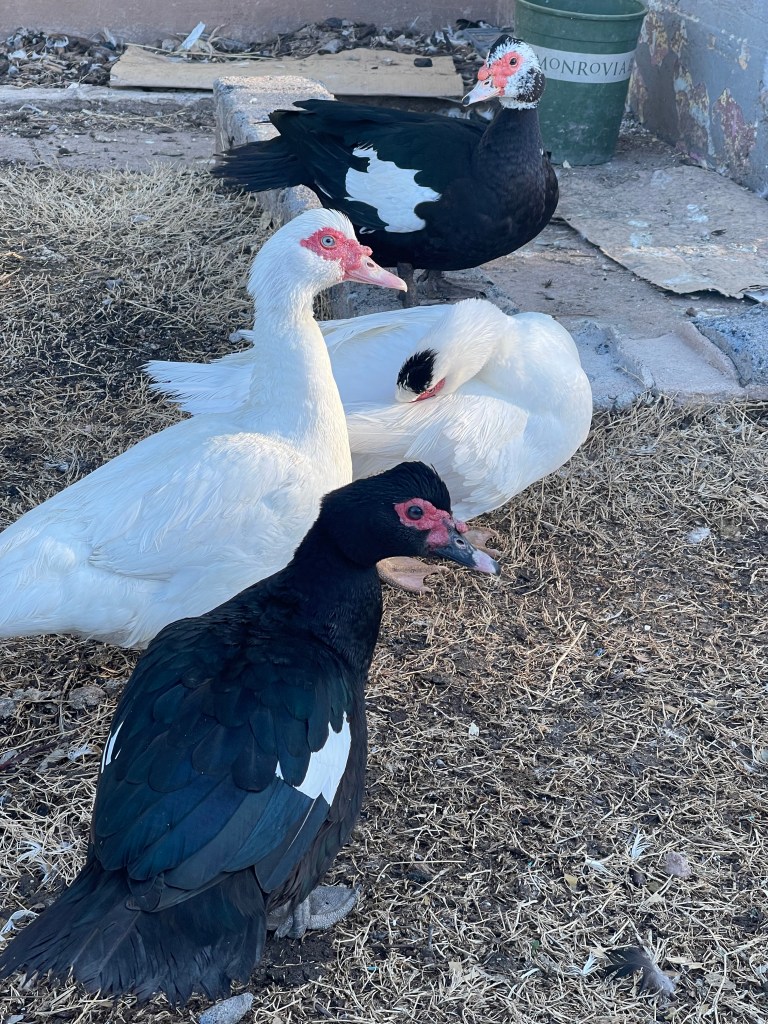
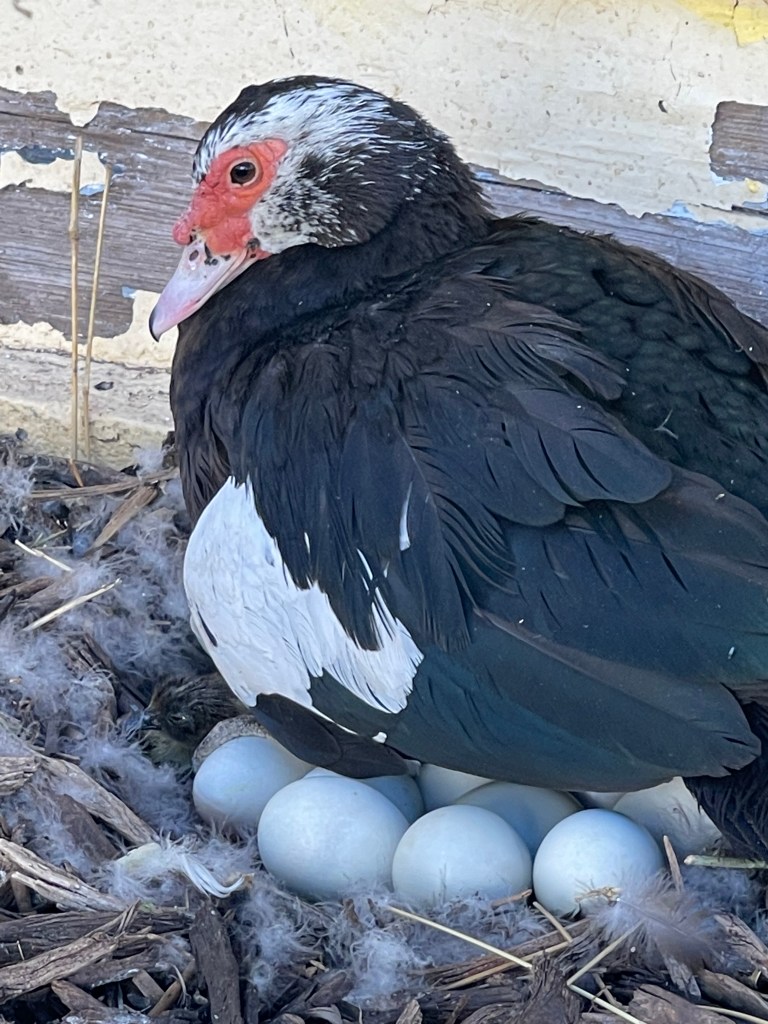
Muscovy Ducks: We love raising Muscovies at our house! Muscovy ducks are the only domestic duck breed that wasn’t derived from Mallard ducks. Muscovies are nearly silent ducks who communicate with body language and short, quiet series of hisses and whistles rather than quacks. They’re incredible breeders with hens that can sometimes hatch up to 20 ducklings at a time and will do so 3 or maybe even 4 times in a year. Our Muscovies come from the same French breeder as our Pekins and the work they’ve done with Muscovy genetics is incredible. Our drakes get up over 12 lbs in as little as 12 weeks and the hens get to about 6 lbs in the same time frame. The difference in size is great for variety. The meat is much leaner than the meat from mallard derived duck breeds and the meat is often said to taste like beef. We often serve Muscovy duck breast seared on the grill with chimichurri just like a Brazilian sirloin cap steak. Our hens lay around 220 eggs per year.
Rouen Ducks: We are new to Rouens, but they are a smaller duck that we hope dresses out around 3 lbs at 12 weeks of age. They are known for producing very mild, tender meat and many French chefs say they’re the finest duck breed for roasting whole. Julia Child said that the Rouen duck was her favorite duck to cook.
Pigs: Pigs are the thing I’m most excited about having the opportunity to raise now that we have the space! We will be experimenting with several different breeds, but starting off we will be raising Berkshire and Red Wattles while we try to figure out the logistics of bringing a specific line of Durocs back from Alabama. Our pigs will be raised using Korean Natural Farming techniques which gives the pigs a large pen with plenty of room to move around and act like pigs, but it keeps them contained so they don’t tear up the pasture we’re working to build. They’ll be raised on a wood chip bedding to help them regulate a comfortable temperature and after they’re processed, the wood chips will be sprayed with lactic acid bacteria and spread throughout the pasture to finish composting. We are selecting pigs that have the genetic potential to put on much more fat than “the other white meat” like the pork we see in grocery stores. Our pigs will be fed a diet of barley, milo, wheat, split peas, and spent brewery grains rather than the typical corn/soy formulation because we want pure white fat that doesn’t oxidize or go rancid easily. This will be very important for our meat goals because in addition to producing typical roasts and chops, we want to maximize the potential of our pork for cured meats… Traditional nitrate free bacon, country hams, guanciale, capicola, etc.

 raisedincochise.com
Leave a comment